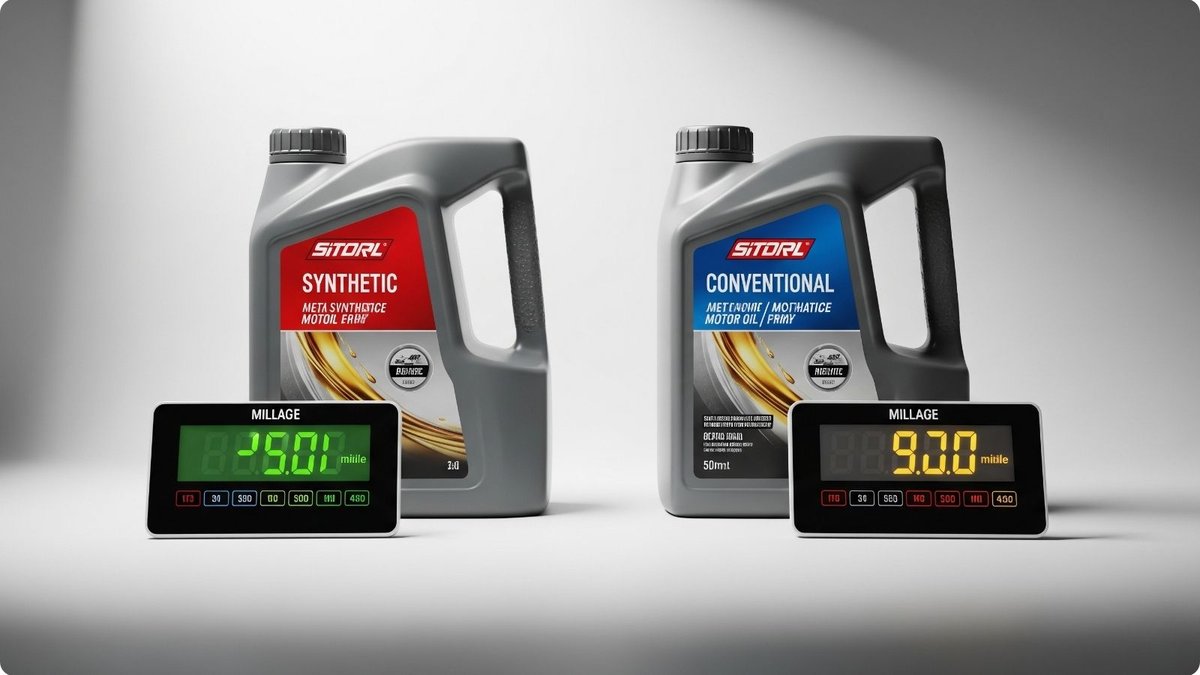
As a seasoned driver, you know that the right motor oil isn't just a recommendation—it's the lifeblood of your vehicle. Navigating the choices between High Mileage Oil vs. Conventional vs. Synthetic: A Comparative Guide can feel like deciphering a cryptic code. Should you stick with the basics, upgrade to a modern marvel, or opt for something specifically formulated for an aging engine?
Let's cut through the noise. This guide, based on decades of automotive insights, will give you the clear, trustworthy answers you need to make the best decision for your car, ensuring it runs cleaner, stronger, and longer.
Engine Oil Types: At a Glance
Here’s a quick primer on the three main types of engine oil we’ll explore:
- Conventional Oil: The most traditional and affordable choice, made from refined crude oil. It provides basic lubrication and protection, suitable for older, simpler engines with lower demands.
- Full Synthetic Oil: A highly engineered oil with a refined oil base and advanced chemical additives. It offers superior protection, performance, and longevity, designed for modern engines and demanding conditions.
- High-Mileage Oil: Specifically formulated for engines with over 75,000 miles, this oil often blends synthetic and conventional bases with specialized additives to address the unique needs of older vehicles, such as seal conditioning and reduced oil burn-off.
Understanding Your Engine's Lifeblood
Before we dive into the specifics of each oil type, let's briefly touch on why engine oil is so critical. Your engine is a complex system of moving parts, constantly generating friction and heat. Oil's primary jobs are to:
- Lubricate: Create a thin film between metal components to reduce friction and wear.
- Cool: Absorb heat generated by the engine and carry it away.
- Clean: Suspend dirt, sludge, and contaminants, preventing them from accumulating.
- Protect: Guard against rust and corrosion.
- Seal: Help fill small gaps between engine parts, improving compression.
Without the right oil, your engine would quickly overheat, seize up, and suffer catastrophic damage. The choice you make impacts everything from fuel efficiency to the lifespan of your vehicle.
The Three Contenders: A Deep Dive
Each oil type serves a distinct purpose, offering different levels of protection, performance, and price points. Let's break them down.
1. Conventional Oil: The Traditional Choice
Conventional motor oil is the original workhorse, refined from crude oil. It’s been the standard for decades, and for many older vehicles or those with very low demands, it still gets the job done.
What it is: Essentially, conventional oil is a mineral-based lubricant. It undergoes a refining process to remove impurities and enhance its basic lubricating properties. It might contain a few common additives, but nothing compared to its synthetic counterparts.
Pros:
- Affordability: This is its strongest suit. Conventional oil is typically the least expensive option on the market, making it attractive for budget-conscious drivers.
- Basic Protection: It provides adequate lubrication and heat dissipation for engines with simpler designs and less strenuous operating conditions.
Cons: - Limited Protection: Compared to synthetic oils, conventional oil offers less resistance to thermal breakdown, meaning it degrades faster under high temperatures and stress.
- Shorter Change Intervals: Due to quicker degradation and less effective contaminant suspension, conventional oil typically requires more frequent oil changes—often every 3,000 to 5,000 miles.
- Less Cleanliness: It's not as effective at preventing sludge and deposit buildup, which can be detrimental to engine longevity over time.
- Poor Performance in Extremes: Its viscosity can be less stable in extreme hot or cold temperatures, leading to thicker flow in winter starts and thinner protection in summer heat.
When it's Right:
Conventional oil might be a suitable choice for: - Older vehicles explicitly designed for it.
- Cars with very low mileage driven under mild conditions.
- Drivers prioritizing upfront cost savings over maximum engine protection and extended change intervals.
However, with advancements in engine technology and oil formulations, conventional oil is becoming less common for newer vehicles. Most modern cars are designed with tighter tolerances and higher operating temperatures, benefiting significantly from more advanced lubricants.
2. Full Synthetic Oil: The Modern Marvel
Full synthetic oil is the pinnacle of lubrication technology, engineered to deliver superior performance and protection. It's the oil of choice for most modern vehicles, high-performance cars, and even many older engines looking for an upgrade.
What it is: Unlike conventional oil, full synthetic oil starts with a more highly refined base oil, which then undergoes extensive chemical engineering. This base is blended with a precise cocktail of high-performance chemical additives, such as castor waxes, paraffinic oils, and polyalphaolefin. The result is a consistent, pure lubricant with predictable molecular structures.
Advantages that Set it Apart:
- Superior Engine Wear Protection: The refined molecules and advanced additives create a stronger, more consistent film, significantly reducing metal-on-metal friction. This minimizes strain on internal components, greatly reducing wear and damage over time.
- Keeps Engines Cleaner: Full synthetics contain potent detergents and dispersants that actively fight sludge, varnish, and deposit buildup. This keeps critical engine parts clean and functioning optimally.
- Maintains Better Flow at All Temperatures: One of synthetic's key strengths is its stable viscosity. It flows quickly and efficiently even in frigid startup conditions, protecting your engine from initial dry friction. At the other end, it maintains its protective film even under extreme operating temperatures, preventing breakdown and thinning.
- Degrades Slowly, Extending Oil Change Intervals: Thanks to its chemical stability, full synthetic oil resists oxidation and breakdown far better than conventional oil. This means you can typically go much longer between oil changes, often 7,500 to 15,000 miles or even more, depending on your vehicle and driving conditions.
- Withstands Extreme Temperatures: Whether you're driving in scorching desert heat or sub-zero winters, synthetic oil maintains its integrity and flow rate, ensuring consistent protection.
- Better Overall Performance: Its lower density and superior flow reduce drag within the engine, potentially leading to marginal improvements in fuel efficiency and horsepower.
Usage:
Full synthetic oil is recommended for: - Most new cars: Modern engines are designed with tighter tolerances that benefit immensely from synthetic's consistent viscosity and lubrication.
- High-performance vehicles: Turbocharged, supercharged, or sport engines place extreme demands on oil, which only synthetics can adequately meet.
- Heavy-duty applications: Towing, frequent stop-and-go traffic, or extreme driving conditions.
- High-mileage engines: Crucially, the myth that low-viscosity synthetic oil causes leaks in older engines has largely been debunked by modern advancements. Full synthetic oil is perfectly compatible with high-mileage engines and can offer excellent protection and performance, even for vehicles with 75,000+ miles.
3. High-Mileage Oil: A Niche Hero
High-mileage oil is a specialized formulation designed with the unique challenges of aging engines in mind. It's not just a marketing gimmick; it contains specific additives to address common issues found in vehicles with many miles under their belt.
What it is: High-mileage oil is specifically designed for older engines, typically those with over 75,000 miles. It contains special additives and often has a slightly higher viscosity than some full synthetic oils, though viscosity still varies by grade (e.g., 5W-30, 10W-40), always follow your owner's manual. These additives are the secret sauce.
Benefits for Older Engines:
- Seal Conditioning: This is perhaps the most celebrated feature. High-mileage oil contains seal conditioners that work to rejuvenate internal rubber seals and gaskets. Over time, these seals can dry out, harden, and crack, leading to minor oil leaks. The conditioners help to swell and soften these components, reducing seepage, stopping minor leaks, and preventing further drying out.
- Higher Viscosity (Often): While still adhering to specified grades, many high-mileage formulations tend to err on the side of slightly higher viscosity within that grade. This added "thickness" can help reduce leakage through the fine cracks and worn tolerances common in older engines.
- Reduced Oil Burn-Off: Older engines can develop worn piston rings and valve guides, leading to increased oil consumption and burn-off, often evidenced by blue exhaust smoke. High-mileage oil formulations are designed to be more resistant to burn-off, helping to keep more oil in the engine and reducing the need for frequent top-offs.
- Enhanced Engine Cleanliness: These oils feature more detergents and dispersants than conventional oils to actively minimize sludge and deposit buildup. This is crucial for older engines, which may have accumulated deposits over years of use, potentially hindering performance and lubrication.
- Improved Lubrication for Worn Parts: With higher mileage comes increased wear on internal engine components. High-mileage oils often include additional anti-wear additives to provide a more robust lubricating film, reducing further wear and tear and helping to extend engine life.
When to Consider Switching to High-Mileage Oil:
The 75,000-mile mark is a general guideline, not a strict rule. The decision to switch should depend on your engine's actual condition, your driving habits, and maintenance history.
Consider switching if your car has over 75,000 miles and exhibits signs of aging, such as: - Minor Oil Leaks: Small oil stains on your driveway or garage floor.
- Smell of Burning Oil: Often indicates oil dripping onto hot engine components.
- Blue Exhaust Smoke: Especially during startup or acceleration, a sign of oil burning.
- Rough-Feeling Engine: While not exclusively oil-related, better lubrication can improve an aging engine's smoothness.
- Frequent Oil Top-Offs: If you find yourself adding a quart of oil between changes.
It's important to remember that high-mileage oil is not a magic bullet or a permanent solution for all mechanical wear or major leaks. If you have severe leaks, significant blue smoke, or a consistently rough engine, these issues likely require professional mechanical repair rather than just an oil change.
Types of High-Mileage Oil:
Just like other oils, high-mileage formulations come in different blends: - Synthetic High-Mileage Oil: This combines the advanced protection and longevity of a synthetic base with the specialized additives of high-mileage oil. It offers superior protection, lasts longer, and performs well in extreme temperatures. Typical change interval: 5,000-7,500 miles.
- Conventional High-Mileage Oil (or Synthetic Blend High-Mileage): These are more affordable, often a blend of conventional and synthetic bases with high-mileage additives. They offer some benefits but generally require more frequent changes. Typical change interval: 3,000-5,000 miles.
Always refer to your owner's manual for the correct oil viscosity (e.g., 5W-30, 10W-40) before making a switch.
Side-by-Side: How They Stack Up
Let's lay out the key differences between these three types to help you visualize the comparison.
| Feature | Conventional Oil | Full Synthetic Oil | High-Mileage Oil |
|---|---|---|---|
| Base Material | Refined crude oil (mineral) | Chemically engineered (synthetic) | Blend of conventional/synthetic + specialized additives |
| Viscosity | Less stable, prone to thinning/thickening | Highly stable across temperature extremes | Often slightly thicker within its grade; stable |
| Additives | Basic detergents, anti-wear agents | Advanced detergents, anti-wear, friction modifiers | Seal conditioners, extra detergents, anti-wear, burn-off reducers |
| Wear Protection | Good for basic use, less robust | Superior, reduces engine strain significantly | Excellent for older engines, targets existing wear |
| Engine Cleanliness | Adequate, but prone to sludge buildup | Superior, actively prevents deposits | Enhanced, targets existing and future deposits |
| Temperature Range | Limited, struggles in extremes | Excellent performance in extreme hot/cold | Very good, especially synthetic high-mileage |
| Oil Change Interval | Shorter (3,000-5,000 miles) | Longer (7,500-15,000+ miles) | Mid-range (3,000-7,500 miles, depends on type) |
| Cost | Lowest | Highest | Mid-to-high, depending on blend |
| Best For | Older, simple engines; budget-conscious | Most modern cars, performance, heavy-duty | Engines >75,000 miles with signs of aging |
| You might be asking, Should you use high mileage oil? The answer truly hinges on your vehicle's specific needs and symptoms. While high-mileage oil can certainly mitigate minor leaks and prolong the life of seals, it's not always the best option for pure performance or the ultimate in engine protection, especially when compared to full synthetic. | |||
| Generally, full synthetic oils offer better overall performance than high-mileage oils because their lower density allows for better flow and less internal drag. High-mileage oils, being thicker and optimized for "rejuvenation," may cause the engine to work marginally harder, potentially reducing peak performance. However, for an older engine already struggling with leaks and burn-off, the specialized benefits of high-mileage oil might outweigh this subtle performance difference. |
Crucial Warnings & Actionable Insights
Making the right oil choice isn't just about benefits; it's also about avoiding common pitfalls that could harm your engine.
- Do NOT use high-mileage oil in new engines. The specialized additives and often higher viscosity of high-mileage oil are unnecessary for a new, tight engine. Its thickness can negatively impact cold startups and oil flow to critical, precisely machined components, potentially reducing fuel efficiency and performance in an engine not designed for it. For newer cars, full synthetic is almost always the recommended choice.
- You CAN use full synthetic oil in high-mileage engines. This is a widespread misconception that needs to be clarified. Modern full synthetics are perfectly compatible with high-mileage engines and, in many cases, offer superior protection and performance. The old myth that their low viscosity causes leaks in older engines has been debunked; synthetic oils are incredibly stable and flow well without being inherently "thinner" than the specified conventional grade. If your high-mileage engine isn't showing signs of leaks or excessive oil consumption, a quality full synthetic is often an excellent choice for continued robust protection.
- High-mileage oil is not a fix for severe leaks. While high-mileage oil can mitigate minor seepage and condition seals, if your engine is leaving significant puddles of oil or blowing thick blue smoke consistently, the additional cost of high-mileage oil may not be justified. These are signs of mechanical issues (like severely worn gaskets or piston rings) that require professional diagnosis and repair, not just an oil change.
- Full synthetic oils generally offer better performance. As mentioned, because of their superior flow characteristics and lower internal friction, full synthetic oils typically allow an engine to run more efficiently and potentially produce slightly more power compared to high-mileage or conventional oils of the same viscosity grade. The additives in high-mileage oils, while beneficial for aging seals, don't necessarily contribute to raw engine performance in the same way synthetic's molecular consistency does.
Making the Right Choice: Your Decision Guide
So, how do you decide which oil is right for your vehicle? It comes down to a few key considerations:
- Consult Your Owner's Manual, First and Foremost: This is your bible. It specifies the correct oil viscosity (e.g., 5W-30, 10W-40) and often recommends oil types (conventional, synthetic blend, or full synthetic). Adhering to these recommendations is crucial for warranty purposes and optimal engine function.
- Consider Your Car's Age and Mileage:
- Newer Car (under 75,000 miles): Almost certainly go with full synthetic. It's what modern engines are designed for and will provide the best long-term protection.
- Older Car (over 75,000 miles) with no issues: Full synthetic is still a strong contender. It offers superior protection and can extend engine life.
- Older Car (over 75,000 miles) with minor leaks or oil consumption: High-mileage oil becomes a very compelling option due to its seal conditioners and anti-burn-off properties. A synthetic high-mileage blend would offer the best of both worlds.
- Assess Your Driving Habits and Environment:
- Frequent Short Trips, Stop-and-Go Traffic: These conditions are tough on oil. Full synthetic's resistance to sludge and stable performance in varying temperatures makes it ideal.
- Towing, Heavy Loads, Extreme Temperatures: Again, full synthetic is the clear winner for its robust protection under stress.
- Highway Cruising, Moderate Climate: Less demanding, but synthetic still offers superior longevity and protection.
- Factor In Your Budget vs. Long-Term Benefits:
- While full synthetic and high-mileage oils have a higher upfront cost, their extended change intervals and superior protection can lead to savings over time in terms of fewer oil changes and potentially preventing costly engine repairs.
- Conventional oil is cheapest per quart but requires more frequent changes and offers less protection, which could lead to higher costs down the road if engine wear accelerates.
Common Questions & Misconceptions
Let's tackle a few lingering questions you might have about engine oil.
1. Can I mix different types of engine oil?
While not ideal, mixing conventional and synthetic (or high-mileage) oils won't cause immediate engine damage in an emergency. Many "synthetic blend" oils are precisely that—a mix. However, you'll dilute the benefits of the superior oil. For optimal performance and protection, it's always best to stick to one type of oil. If you're switching from conventional to synthetic, it's fine; just be aware that the full benefits of synthetic won't be realized until all the conventional oil has been flushed out over a couple of oil change cycles.
2. Is high-mileage oil just thicker oil?
No, this is a misconception. While some high-mileage oils might have a slightly thicker formulation within their specified viscosity grade, their primary benefit comes from the specialized additives, particularly the seal conditioners. You should always use the viscosity grade recommended in your owner's manual, regardless of whether it's conventional, synthetic, or high-mileage.
3. What do the numbers on oil bottles (e.g., 5W-30) mean?
This refers to the oil's viscosity, or its resistance to flow. The "W" stands for "winter." The first number (e.g., 5W) indicates how the oil flows in cold temperatures; a lower number means it flows more easily, which is crucial for cold starts. The second number (e.g., 30) indicates how the oil flows at higher operating temperatures. Always match these numbers to your vehicle's specifications in the owner's manual. Using the wrong viscosity can lead to poor lubrication, increased wear, and reduced engine efficiency.
Beyond the Oil: A Holistic Approach to Engine Health
Choosing the right oil is a monumental step, but it’s part of a larger picture of vehicle care. To truly ensure your engine’s longevity and performance, consider these additional practices:
- Adhere to Maintenance Schedules: Don't just change your oil; follow the entire maintenance schedule laid out in your owner's manual. This includes checking other fluids, rotating tires, and inspecting belts and hoses.
- Check Your Oil Regularly: Even with modern oils, it’s a good habit to check your oil level monthly. This helps you catch potential leaks or excessive oil consumption early.
- Replace Your Oil Filter: Always replace your oil filter with every oil change. A clogged filter can prevent oil from reaching vital engine parts.
- Pay Attention to Warning Lights: If your oil pressure light comes on, stop driving immediately and check your oil. Ignoring it can lead to severe engine damage.
- Listen to Your Car: Unusual noises, changes in performance, or visible smoke are all signs your engine might need attention. Don’t wait for a problem to escalate.
By understanding the differences between high mileage, conventional, and synthetic oils, and combining that knowledge with diligent maintenance, you empower yourself to make informed decisions that will keep your vehicle running smoothly for years to come. Your car will thank you for it.